- JAAF Sustainability Newsletter
- Posts
- JAAF Sustainability Newsletter
JAAF Sustainability Newsletter
August Edition

Ramesh De Silva
September 01, 2025

Dear Reader,
Thank you for being a part of JAAF’s sustainability newsletter. This newsletter is a part of JAAF’s efforts to respond to and serve Sri Lanka Apparel’s evolving needs especially through bridging the knowledge gap that exists in the Environment, Social and Governance Space.
So Welcome! to the August JAAF Sustainability Newsletter, featuring a selection of the latest developments in the sustainability space as it relates to the apparel industry in Sri Lanka. Through this information bridge JAAF aims to curate and communicate the latest developments in sustainability from across the apparel and textile sectors.
We look forward to your ongoing support and encourage you to engage with us by sharing this newsletter with your colleagues and peers in Sri Lanka and afar. You can also subscribe to this newsletter directly by clicking the link below.
Don't hesitate to contact us at [email protected] if you would like to partner or better yet share the developments in sustainability with our community.
Events
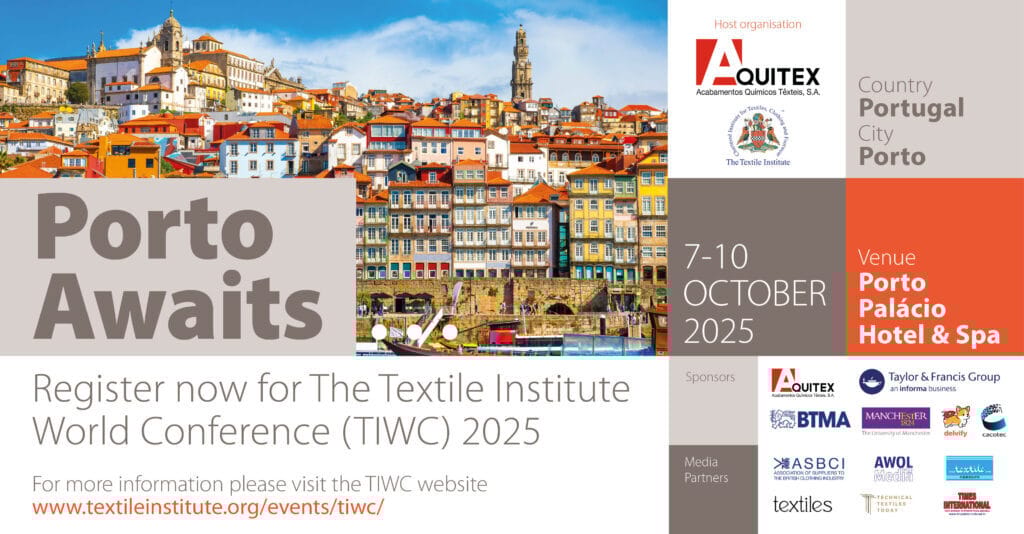
The 93rd Textile Institute World Conference (TIWC) 2025, proudly hosted by AQUITEX, will take place from 7 – 10 October 2025 at Porto Palácio Congress Hotel and Spa, Porto, Portugal.
With its broad and interdisciplinary scope, TIWC 2025 will welcome papers and presentations that discuss diverse topics such as:
Materials & Innovation: Biomaterials, Advanced Fibres, Smart Fabrics, Technical Textiles, Nanotechnology
Sustainability & Circularity: Textile Recycling, Circular Business Models, Sustainable Fashion Practices
Digitalisation & Technology: CAD/CAE Technology, Smart Textiles, Industry 4.0, Digital Manufacturing
Fashion & Design: Sustainable Fashion Trends, Digital Fashion
Supply Chain & Business Models: Sustainable Supply Chains, Retailing, and Digitalisation in Fashion
JAAF Insights
JAAF, together with GS1 Asia Pacific and the Asian Development Bank (ADB), successfully hosted the Opening Webinar on 30th July 2025 to mark the transition of the ESG Digital Traceability & Transparency Project into its second phase.
The session brought together core team members and company representatives to review the outcomes of Phase 1, which piloted a prototype for QR code–based traceability in Sri Lanka’s apparel supply chains. The discussion highlighted how the solution enables suppliers to credibly demonstrate their sustainability performance, while also preparing the industry to meet the fast-evolving requirements of global ESG regulations such as the EUDPP, EUDR, CBAM, and CSRD.
Participants welcomed the official launch of the Phase 1 report and engaged actively in shaping the roadmap for Phase 2. Key priorities identified include scaling the prototype, broader stakeholder engagement, capacity building, and ensuring interoperability with international standards.
With Phase 2 scheduled to commence in October 2025, the apparel industry is now set to operationalise and embed this breakthrough initiative at scale. This milestone reinforces Sri Lanka Apparel’s position as a pioneer in building transparent, ESG-driven global supply chains.
Global Fashion Regulations
The DCTS supports developing countries to create jobs, income, and grow their economies, through exporting to the UK with zeroed or reduced tariffs. The Scheme also provides greater scope for UK businesses to diversify and build resilient supply chains with potential knock-on impact on consumer prices, particularly on clothing and basic food items.
As announced in the UK Trade Strategy, the UK Government has committed to making it easier for developing countries to source from other countries in their regions, then process or manufacture goods and export duty-free to the UK.
Apparel industry emissions jumped 7.5 percent in 2023, the first increase since we began tracking in 2019. That rise, revealed in the latest Apparel Impact Institute (Aii) report, brings the sector’s total footprint to 944 million metric tons of CO₂e—nearly 2 percent of all global emissions—and further derails the industry from its 2030 climate goals.
The accredited testing and certification body OETI has developed the new Inspected Quality seal of quality “Regionally Produced” in collaboration with designer Julia Deiger from the sustainable fashion label DeLin.
The European Parliament is debating legislation to reduce sustainability reporting requirements in the European Union. The original proposal of the European Commission included a drastic reduction of the scope of a pair of sustainability reporting directives. The member leading the drafting of the Parliament’s has released his draft proposal, calling for even more cuts, alarming sustainability activists and emboldening business interests. That proposal was debated in the June 24 meeting of the Committee on Legal Affairs, known as JURI.
Today, the European Commission has launched a crucial Public Consultation for its upcoming Circular Economy
Act (CEA). The Foundation has joined a coalition of seven leading European civil society organisations to issue a joint statement calling for an ambitious and transformative piece of legislation.
The highly anticipated Circular Economy Act, expected to be proposed in Q4 2026, is a cornerstone of the EU's broader Clean Industrial Deal package, which aims to position the EU as the world leader in the circular economy by 2030. This new act will build upon the foundation laid by the 2020 Circular Economy Action Plan, which has already spurred significant legislative initiatives in areas like product design and waste management.
Next week, governments from around the world will meet in Geneva, Switzerland, for what is scheduled to be the final round of global plastic pollution treaty negotiations (INC-5.2).
Countries failed to reach an agreement on tackling plastic pollution last year at what was supposed to be the final round of negotiations in Busan, South Korea.
Over 100 nations wanted to cap plastic production while several oil-producing countries were only prepared to target plastic waste.
Behind fashion’s glamorous appeal lies a serious challenge: the growing problem of textile waste. According to Earth.org, over 92 million tonnes of textile waste are generated annually1, and by 2030, this figure could soar beyond 134 million tonnes. Yet only 15 per cent of post-consumer textiles in the US2 are collected for reuse or recycling. The remaining 85 per cent end up in landfills or are incinerated. With climate urgency on one side and growing consumer expectations on the other, the industry is being pushed to rethink its back-end systems.
In the early 2000s, Peugeot, Citroën, and Toyota all sought to enter the small city car market. Rather than going it alone, they shared the design and development of three versions of small hatchbacks. Produced in a shared factory and differentiated through cosmetics, marketing, and service, their collaboration reduced upfront costs and risk while preserving competition across the market.
This kind of strategic partnership is nothing new. In the linear economy, businesses have long collaborated to overcome high upfront costs, inadequate infrastructure, and shifting customer expectations. Yet in the circular economy transition, many companies still act alone, making isolated and incremental improvements that risk diminishing returns.
A DPP is a comprehensive digital record designed to provide consumers, businesses, and regulators with a clearer view of a product’s sustainability footprint. Once fully implemented, consumers will have one-click access to detailed information about a product’s entire life cycle, including its origin, material inputs, environmental impact, and end-of-life disposal instructions. By increasing transparency, regulators expect DPPs to drive circularity and more sustainable consumption and production patterns.
The UK’s Extended Producer Responsibility (EPR) for Packaging Regulations, effective from January 2025, introduces an entirely new approach to the management and recycling of waste packaging.
Fashion retailers will now bear the full cost of the packaging disposal and must comply with new detailed reporting requirements. This article explores the scope of the regulation, outlines compliance strategies, and presents sector-specific case studies to guide businesses through the transition.
Ensuring Integrity in the Use of Life Cycle Assessment Data is a comprehensive position paper from Textile Exchange outlining best practice for the responsible use of Life Cycle Assessment (LCA) data in the fashion, textile, and apparel industry.
Neighborhood Watch
Bangladesh wants to increase the scale of its cotton production. A new memorandum of understanding with a sustainable cotton sourcing platform aims to help.
This would be no easy lift: Cotton production in the South Asian nation remains relatively modest with 60,000 farmers growing the cash crop compared with neighboring India’s roughly 6 million. Because of the voracious demands of its textile sector, Bangladesh is the world’s second-largest importer of cotton after China.
Polyester and PET recycler Loop Industries plans to expand its footprint in India with the acquisition of land slated for the development of an Infinite Loop manufacturing facility.
The 93-acre site—which is located in India’s Gujarat state—offers enough space for an initial 70,000 metric ton capacity facility for producing low-carbon recycled dimethyl terephthalate (rDMT), recycled mono-ethylene glycol (rMEG)—materials. The space also will be able to accommodate a further 100,000 metric ton expansion for Infinite Loop production once the first plant is operational. Located in a Petroleum, Chemicals and Petrochemicals Investment Region, the site will have an expedited permitting process, which will allow Loop to complete the facility by the end of 2025.
Denim Deal, the European initiative committed to standardizing circular practices in denim production, is laying the foundation to scale textile recycling in India.
The public and private organization announced the launch of the India Denim Deal Hub, a new joint initiative with Global Alliance For Textile Sustainability Council (GATS) and Enviu Textiles focused on accelerating circularity in the Indian denim industry.
General
Fashion’s climate commitments are faltering. According to advocacy group Stand.earth’s latest report, 40 per cent of brands increased their emissions last year. The sector’s overall emissions jumped 7.5 per cent in the same period, per the Apparel Impact Institute (Aii). If fashion’s momentum to tackle the climate crisis wasn’t already questionable, the political climate is slowing things further, as US tariffs drive up costs and regulators move to weaken sustainability legislation in the EU.
While yarn production has long been fully automated, the time may now have come for RMG (ready-made garment) production.
A pioneer in this field is Softwear Automation, a technology innovator which has developed a fully autonomous sewing solution: they are making robots that can sew clothes – called ‘Sewbots’.
Softwear Automation has just announced the successful close of its $20 million Series B1 funding round. The round was led by a strategic investment from BESTSELLER, the Danish fashion company behind brands such as JACK & JONES, VERO MODA, and ONLY. The investment was made through Invest FWD, BESTSELLER's dedicated innovation and investment platform. Current investors also participated in the financing.
An investigation by the Changing Markets Foundation reveals that more than 900 million items of used clothing were exported to Kenya from Europe, the U.K., the U.S., Canada and China in 2021 alone. Of these items, more than half were considered waste, unsellable, and more than a third likely contained plastic-based fibers that don’t biodegrade. Instead, they break down into ever smaller microfibers that can contaminate food or be breathed into the lungs.
Nearly every week brings another brand partnership, factory blueprint or financing deal related to a polyester recycling startup. The space is crowded with young companies seeking to weave together a circular economy that pushes virgin polyester to the margins.
In a few short decades, polyester has displaced cotton as the dominant fiber. It’s found in nearly two-thirds of new fashions. Because it’s made with cheap fossil fuel byproducts, however, the apparel industry’s emissions shot up 7.5 percent in 2023 after a modest dip, according to a June report by the Apparel Impact Institute. As a result, the industry accounts for almost 2 percent of all the world’s climate emissions.
The M&S guarantee, effective from the purchase date, covers manufacturing and material defects but not normal wear and tear or accidental damage, said the brand.
The guarantee is part of M&S’s Another Life initiative, which is aligned with the company’s Plan A sustainability strategy.
It emphasises circularity through Rewear, Repair, Recycle, and Resale. The Rewear component aims to assure customers of product durability.
Cascale today released the Better Buying 2025 Garment Industry Scorecard, a benchmark tool that tracks year-over-year progress in brand and retailer purchasing practices across the global apparel sector. Based on anonymous input from over 1,200 suppliers during the 2025 Better Buying Purchasing Practices Index (BBPPI) ratings cycle, the Scorecard measures performance across seven key purchasing practices categories that directly impact suppliers’ ability to provide decent work and wages.
These suppliers represent over 10 million workers, or roughly one in six of the estimated 60 million workers employed in the global apparel value chain.
Manufacturers and brands excel at working together to create the products consumers love — so why hasn’t that same spirit of collaboration translated to decarbonizing their operations? Nguyen Thi Ngoc Minh, Senior Manager of Sustainability, Facility, and Engineering at Hanesbrands, shows that it absolutely can. In this episode, she shares the inspiring story of how she’s spearheading collaborative efforts to slash greenhouse gas emissions, both in her home country of Vietnam and across the globe.
The fashion industry generates approximately 92 million tonnes of textile waste annually, much of which is disposed of in landfills and waterways.
According to the United Nations Environment Programme, around 60% of clothing materials are plastic, with polyester, acrylic and nylon being common raw materials.
However, some companies are committed to transforming these practices through sustainable manufacturing processes.
The fashion industry can address its environmental challenges by focusing on better manufacturing processes and methodologies, including eliminating greenhouse gas emissions, renewable energy sourcing, repair solutions and refurbishing products to achieve more circular practices.
The fashion industry faces significant challenges due to its linear systems and environmental impact. As sustainability gains priority among consumers, especially Generations Y and Z, the industry is urged to transition towards a circular economy. Despite this, the ‘attitude-behaviour gap’ persists, indicating minimal impact on consumer behaviour. This study explores factors influencing consumer behaviour towards circular fashion, focusing on Generations Y and Z. Nine hypotheses were developed, exploring relationships among environmental awareness, circular fashion awareness, willingness to change, willingness to pay a premium, and circular behaviour. Online surveys yielded 408 responses from participants from developing and developed countries. Structural Equation Modelling (SEM) was used for hypothesis testing. Results show consumer behaviour is influenced by environmental awareness and circular fashion awareness, and willingness to change. Additionally, purchasing decisions are driven by product quality and durability. The findings assist fashion businesses in aligning strategies with consumer perception among Generations Y and Z.
Newsletter Powered By

Reply